


The smallest changes that add up to a year
I recently spent a day at BioCare's longevity event in Edinburgh, and one piece of research has stayed with me.
It made me think about something I see time and time again, both from my years working in nursing and now in nutritional therapy:
We often make healthy living much harder than it needs to be.
What if small really is enough?
Researchers followed nearly 60,000 people in the UK and looked at sleep, physical activity and nutrition together.
What interested me most wasn't the idea of another complicated health routine.
It was how small some of the changes were.
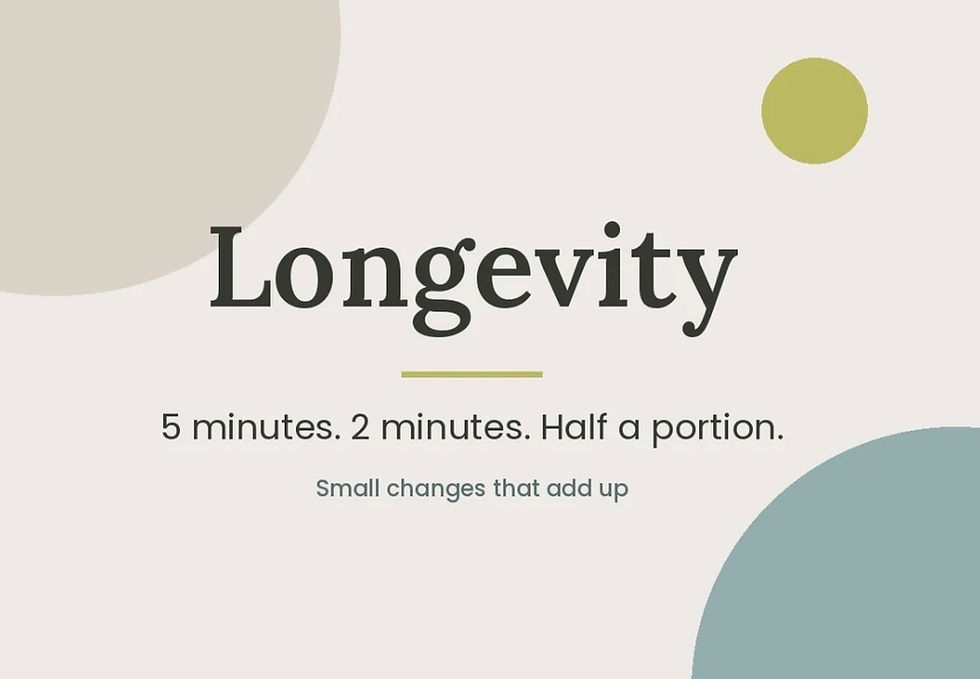
The research suggested that adding around:
5 minutesmore sleep
2 minutesof brisk physical activity
½ portionmore vegetables each day
was associated with a meaningful difference in estimated life expectancy when these behaviours were considered together.
Of course, this doesn't mean that doing these exact things will add a year to an individual's life. Population studies show associations rather than guarantees.
But the message I took from it was simple:
Small changes, repeated consistently, can matter.
And that is something I really believe in.
You don't need to overhaul your life
When we talk about improving our health, it's easy to think we need to do everything at once.
Eat perfectly.Exercise every day.Sleep eight hours.Cut out sugar.Drink more water.Reduce stress.Take the right supplements.
And suddenly looking after yourself feels like another full-time job.
But what if we started much smaller?
Maybe it's:
🌱 Going to bed five minutes earlier.
🌱 Taking the stairs instead of the lift.
🌱 Adding an extra handful of vegetables to lunch.
🌱 Getting outside for a short, brisk walk.
🌱 Adding beans or lentils to a meal.
🌱 Finding a breakfast that keeps you nourished and satisfied.
None of these changes is dramatic.
That's exactly why they have a chance of becoming habits.
Why drastic changes don't always stick
After many years in nursing, I've seen how often people are told what they should change.
But knowing what to do and actually being able to do it are two very different things.
Life gets busy.
Work gets stressful.
Family needs come first.
Energy levels fluctuate.
And sometimes the last thing you need is another long list of things you're doing wrong.
I don't believe people struggle because they lack willpower.
Often, the advice simply hasn't been adapted to their life.
A plan can look perfect on paper and still be completely unrealistic for the person trying to follow it.
Start where you are
This is at the heart of my work as a naturopathic nutritional therapist.
Rather than asking:
"What would the perfect diet look like?"
I prefer to ask:
"What small changes could make this person's health and everyday life better?"
That might mean looking at:
energy and fatigue
gut health and digestion
plant-based nutrition
protein and fibre intake
sleep and daily routines
stress and nervous system support
the overall balance of your diet
Sometimes one small change is enough to get started.
Then, once that feels comfortable, you build from there.
No perfection. No punishment. Just progress.
Small changes add up
Healthy ageing isn't about finding one magic food, supplement or exercise routine.
It's about what we do consistently over time.
One extra portion of vegetables won't transform your health overnight.
One good night's sleep won't either.
But small choices, repeated day after day, gradually become part of how you live.
And that's where they can have the greatest impact.
The same applies to workplace wellbeing
I think this principle extends beyond individual health too.
Workplace wellbeing doesn't always need another huge programme or complicated initiative.
Sometimes it's about giving people simple, realistic tools that fit into their working day.
Small changes that employees can actually use.
Small changes they can actually maintain.
And small changes that, collectively, can contribute to a healthier workplace culture.
What is one small change you could make today?
Maybe it's going to bed a little earlier.
Maybe it's adding some extra vegetables to your lunch.
Maybe it's taking a short walk between tasks.
Or maybe it's simply deciding that you don't need to change everything at once.
Start small. Make it realistic. Build from there.
That's the approach I take with my clients: practical, personalised and evidence-informed nutritional support that starts with where you are, rather than where you think you should be.
If you'd like to explore how nutritional therapy could support your health and wellbeing, I'd love to chat.
🌿 Book your discovery call
Lynn Bee Naturopathic Nutrition | Edinburgh & Online


Comments